How to Use an Ovulation Test
Recommended picks


What an Ovulation Test Measures
Most home ovulation tests look for luteinizing hormone, often shortened to LH, in your urine. LH usually climbs sharply in the day or two before an egg is released, and that climb is what these strips are designed to flag. The popular Easy@Home 50LH (model 50LH) is one example of a strip style kit that many shoppers use for this purpose, with a 4.6 rating across roughly 40,400 reviews. Keep in mind that a test reports a hormone reading, not a guarantee of timing, so treat the result as one helpful signal rather than a definite answer.
When to Start Testing
The right day to begin depends on the length of your typical cycle, so check the chart that comes with your kit. As a general pattern, people count back from the expected start of their next period and begin testing a few days before the midpoint of the cycle. If your cycles vary a lot from month to month, you may need to start earlier and test for more days to catch the surge. When you are unsure about your cycle pattern, a healthcare professional can help you decide on a sensible testing window.
Step by Step Instructions
Start by reading the leaflet in your kit, since timing and line placement differ slightly between brands. Collect urine in a clean, dry cup, then dip the strip to the marked line, or hold the test in your urine stream if your kit is designed that way. Lay the test flat and wait the full number of minutes the instructions specify before you read it. Reading too early or too late can both give a misleading impression, so a small timer helps. Strip kits such as the Easy@Home 50LH and digital style kits like the Easy@Home EZ-WS5020 follow the same basic idea, even though the way you view the result can differ.
Reading Your Results
With a line based test, you compare the test line to the control line. A positive surge usually means the test line is as dark as or darker than the control line, while a faint test line is generally read as negative. Always confirm what counts as positive in your own kit, because thresholds are not identical across brands. Some shoppers prefer a digital reader, such as the Easy@Home EZ-WS5020 (model EZ-WS5020, 4.6 stars across about 78,300 reviews), which shows a symbol instead of asking you to judge line darkness. If a result looks unclear, retest at your next regular time rather than guessing.
Tips for Clearer Readings
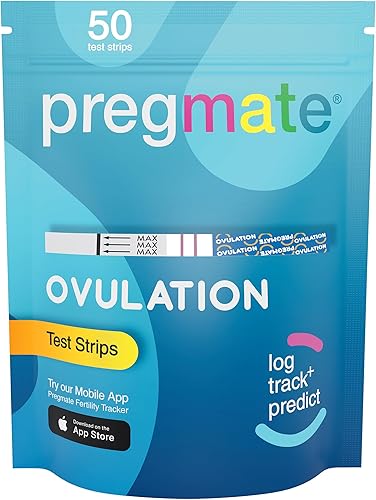
Testing at a consistent time helps you compare results day to day with less guesswork. Many people test in the early afternoon and avoid heavy fluid intake for a couple of hours first, since very dilute urine can mask a surge. Reusable strip kits make daily testing easier on the wallet, and the Pregmate PS-1 (model PS-1) is a widely bought strip option priced around 15.95 dollars with a 4.6 rating from roughly 19,600 reviews. Store unused tests as the package directs and check the expiration date, because old or poorly stored strips can behave unpredictably.
When to Talk to a Professional
Home ovulation tests are informational tools, and they cannot diagnose any condition or confirm pregnancy. If you test for several cycles and never see a clear surge, or if your results are confusing, it is reasonable to speak with a healthcare professional. The same is true if you have irregular cycles, are taking medications, or have questions about fertility, since a clinician can interpret your situation in context. Use these kits to gather information and bring your questions to a professional for personal guidance.
Common mistakes to avoid
- Reading the result before or after the time window stated in your kit, which can make a line look stronger or weaker than it really is.
- Drinking a lot of fluid right before testing, since dilute urine can hide a genuine surge.
- Starting too late in the cycle and missing the surge entirely, especially with irregular cycles.
- Comparing the test line to the control line under poor lighting, which makes line darkness hard to judge.
- Using expired strips or tests that were stored in heat or humidity against the package instructions.
- Treating a positive as proof of ovulation rather than a signal that the LH surge has begun.
Frequently asked questions
What does a positive ovulation test mean?
A positive generally means your luteinizing hormone has surged, which often comes a day or two before ovulation. It does not prove that an egg was released, only that the hormone rise the test looks for has happened. Check your specific kit for how it defines a positive result.
What time of day should I test?
Many kits suggest testing in the early afternoon, and testing at the same time each day makes results easier to compare. Avoid drinking large amounts of fluid for a couple of hours beforehand so your urine is not too dilute. Always follow the timing advice in your own kit.
How many days should I test?
Begin a few days before you expect your fertile window and test daily until you see a clear positive. If your cycles are irregular, you may need to start earlier and test for more days. The chart in your kit can help you pick a starting day.
Can an ovulation test confirm pregnancy?
No. An ovulation test looks for luteinizing hormone, while a pregnancy test looks for a different hormone called hCG. To check for pregnancy you need a separate pregnancy test, and a healthcare professional can answer questions about your results.
Why do I see a faint line?
A faint test line is usually read as negative on most line based kits, often meaning the surge has not started yet. Lines can also look faint in poor lighting or if the test was read outside its time window. Retest at your next regular time and follow your kit instructions.